

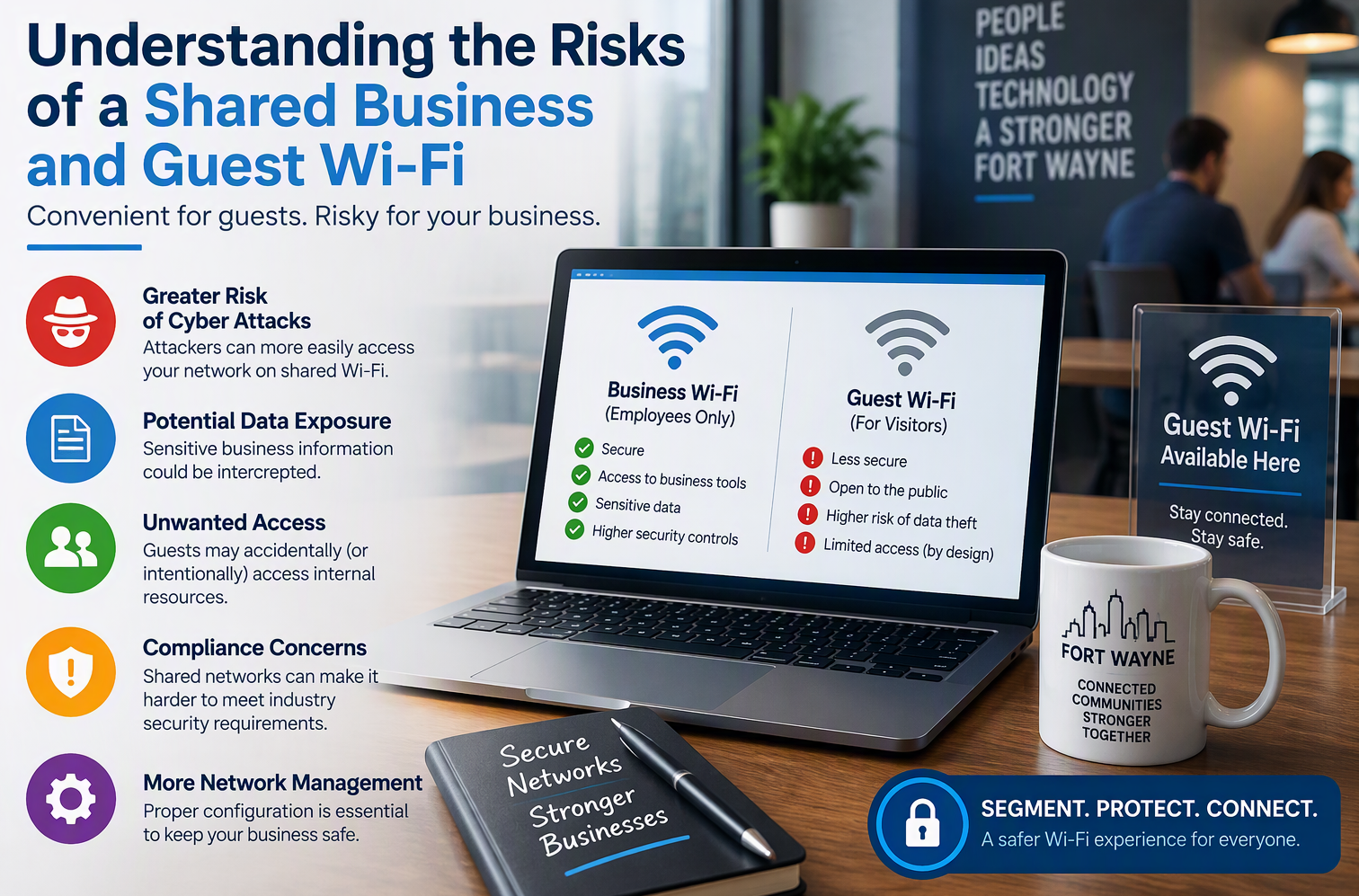
Allowing guests to connect to the same Wi-Fi network used by your business operations can expose your organization to significant IT security risks. While it may seem convenient to offer visitors quick access to your wireless internet, this practice creates a single point of entry for both trusted employees and unknown devices—a scenario cybercriminals are eager to exploit.
When business and guest Wi-Fi traffic mingle on the same network, any device connected—even temporarily—can serve as a potential gateway for threats. A guest’s infected laptop or smartphone could unknowingly introduce malware, ransomware, or viruses. Worse, a malicious actor posing as a guest might seek to intercept sensitive data, monitor employee activity, or launch attacks on internal systems. Without network segmentation, these threats can move laterally, reaching confidential files, financial records, and proprietary assets with alarming ease.
This lack of separation also increases the risk of unauthorized access to critical infrastructure such as servers, printers, and shared folders. Even if you trust your guests, their devices may lack robust security controls, making your entire network vulnerable through no fault of your own. In regulated industries, failing to isolate business operations from public access can also lead to compliance violations and costly penalties.
Understanding these risks underscores why segregating guest Wi-Fi is not just a best practice, but a necessity for modern IT security. Creating a clear boundary between business and guest traffic protects your core operations, strengthens your cybersecurity posture, and offers peace of mind to both staff and visitors.
Key Benefits of Keeping Guest Wi-Fi Separate
Segregating your guest Wi-Fi from your main business network is a simple yet remarkably effective cybersecurity strategy. By creating a distinct wireless network exclusively for guests, you immediately reduce the risk of unauthorized access to your company’s sensitive data and internal systems. This separation acts as a digital barrier, ensuring that visitors, clients, or vendors using your internet aren’t inadvertently exposing your core business infrastructure to threats.
One of the most significant benefits is the containment of potential security breaches. Should a guest device be compromised or harbor malware, its access is limited to the guest network, preventing lateral movement into your operational environment. This isolation protects everything from shared drives and point-of-sale systems to intellectual property and employee communications. It also helps maintain regulatory compliance for industries handling confidential or personal information, since only trusted devices can reach protected resources.
Furthermore, keeping guest Wi-Fi separate optimizes bandwidth allocation. Your business-critical applications maintain priority, minimizing disruptions caused by high guest traffic. Enhanced visibility and easier monitoring of network activity also emerge, allowing IT teams to swiftly detect suspicious behavior and respond before an incident escalates. Altogether, a dedicated guest Wi-Fi delivers robust protection, peace of mind, and a more professional experience for everyone on your premises.
Protecting Sensitive Business Data with Network Segregation
In today’s interconnected business environment, safeguarding sensitive information is more critical than ever. One of the most effective—yet often overlooked—methods to enhance IT security is the segregation of guest Wi-Fi from your primary corporate network. By keeping guest access separate, you create a powerful barrier that protects your essential business data from potential threats and unauthorized access.
When guests, vendors, or clients visit your premises, providing them with Wi-Fi access is often necessary for convenience and professionalism. However, allowing external devices to connect directly to your business network opens the door to risks such as malware infections, accidental data leaks, or even deliberate cyberattacks. Segregating guest Wi-Fi ensures that these devices remain isolated from the systems that store confidential financial records, employee details, and proprietary business information.
Benefits of Network Segregation
- Reduces Attack Surface: Isolating guest traffic limits the number of entry points to your critical infrastructure, making it more difficult for threats to reach sensitive areas.
- Prevents Lateral Movement: Should a guest device become compromised, network segregation prevents attackers from moving freely across your organization’s internal systems.
- Enhances Compliance: Many data protection regulations mandate the separation of networks to safeguard sensitive data, helping your business meet legal and industry-specific requirements.
Ultimately, segregating your guest Wi-Fi is a straightforward, cost-effective strategy that significantly strengthens your IT security posture—ensuring that convenience never comes at the expense of your business’s most valuable data.