

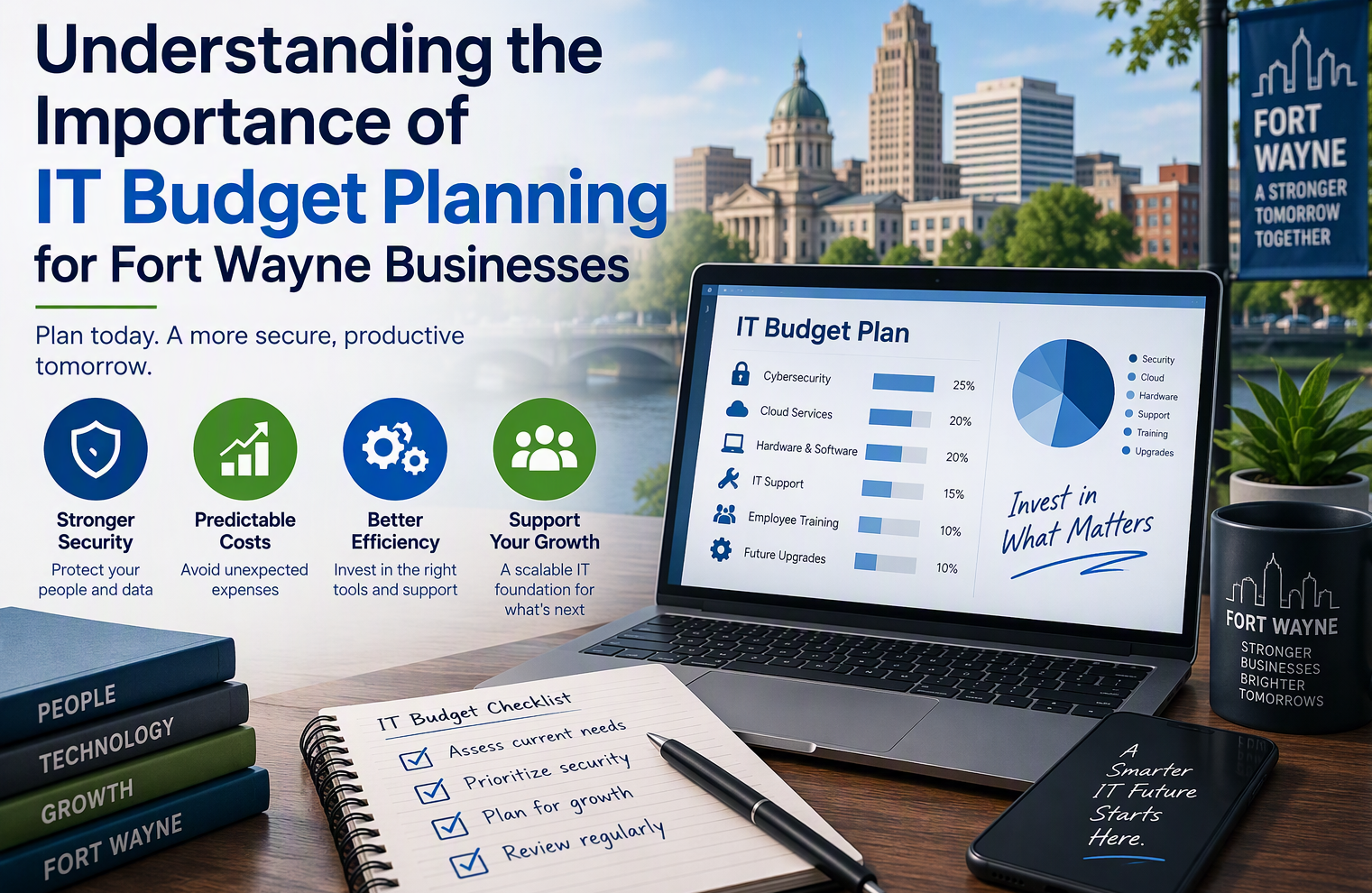
Effective IT budget planning is more than just a year-end exercise; it is the foundation for sustainable growth, operational efficiency, and competitive advantage for Fort Wayne businesses. In today’s technology-driven landscape, companies that approach IT spending reactively—simply fixing problems as they arise or buying new tools without a strategic vision—risk wasting resources, falling behind competitors, and exposing themselves to unnecessary risks. For local organizations, where every dollar counts and technology often underpins critical business processes, the stakes are especially high.
A well-considered IT budget aligns technology investments with business objectives. This means every dollar spent on hardware, software, cloud services, and cybersecurity initiatives is directly tied to goals such as boosting productivity, improving customer experiences, or achieving compliance with industry regulations. In Fort Wayne, where industries like manufacturing, healthcare, and logistics demand robust, reliable tech infrastructure, the ability to forecast and allocate IT resources wisely ensures that businesses can adapt to market changes while keeping costs under control.
Moreover, strategic IT budget planning helps organizations identify inefficiencies—such as underutilized cloud resources or redundant software licenses—before they become expensive mistakes. By anticipating future needs and building flexibility into the budget, Fort Wayne businesses are better equipped to handle rapid technological shifts, scale operations, and pursue innovation without financial surprises. Ultimately, a proactive approach to IT budgeting transforms technology from a cost center into a driver of business value, setting the stage for sustained success in a competitive regional market.
Creating a Comprehensive Inventory of IT Assets and Services
Effective IT budget planning begins with a clear, complete understanding of your organization’s current technology landscape. For Fort Wayne businesses aiming to maximize every dollar, creating a comprehensive inventory of IT assets and services is not just a best practice—it’s the essential first step in strategic financial management. Without a detailed snapshot of what you own, what you’re paying for, and how those resources are being used, budget projections are little more than educated guesses.
Why Inventory Matters
A thorough inventory uncovers hidden costs, identifies underutilized resources, and exposes redundant or outdated systems that quietly drain your budget. By cataloging every piece of hardware, software license, cloud subscription, and third-party service, you gain the insight needed to align IT investments with actual business needs and avoid unnecessary spending. This process is especially critical in the fast-evolving technology environment of Fort Wayne, where businesses often layer new solutions atop legacy systems without retiring the old.
Building Your Asset Inventory
- Hardware: Document every server, workstation, laptop, and peripheral device—including age, warranty status, and replacement schedule.
- Software: List all applications, their licensing models, renewal dates, and current usage metrics.
- Cloud Services: Detail all cloud platforms, storage solutions, SaaS products, and associated subscription tiers.
- Networking & Security: Include routers, firewalls, switches, VPNs, and cybersecurity tools with configuration details.
- Support & Maintenance: Capture ongoing service contracts, IT support arrangements, and managed service provider agreements.
With this holistic inventory in hand, Fort Wayne businesses are empowered to make informed decisions about consolidation, upgrades, and cost-saving opportunities. It establishes a foundation for accurate forecasting and helps ensure your IT budget supports business growth rather than unchecked overhead.
Distinguishing Between Recurring Expenses and One-Time Investments
Effective IT budget planning for Fort Wayne businesses begins with a clear distinction between recurring expenses and one-time investments. Understanding these categories is crucial to creating a budget that supports both daily operations and long-term growth.
Recurring Expenses: The Pulse of Daily Operations
Recurring expenses represent the ongoing costs necessary to keep your business technology running smoothly. These include software subscriptions, cloud service fees, managed IT support contracts, cybersecurity monitoring, and hardware maintenance agreements. They form the predictable backbone of your IT environment, allowing for consistent, reliable service delivery.
- Software-as-a-Service (SaaS) licenses: Monthly or annual payments for tools like Microsoft 365 or CRM platforms.
- Cloud infrastructure: Regular charges for storage, compute, and data transfer based on usage.
- Support and monitoring: Managed IT services that ensure system health and security.
Anticipating these recurring expenses enables accurate forecasting and helps prevent surprise costs that could disrupt cash flow.
One-Time Investments: Building for the Future
One-time investments, on the other hand, are infrequent but significant purchases that move your business forward. These might include upgrading network equipment, implementing a new ERP system, or conducting a major security overhaul. While these investments often require a larger upfront outlay, they deliver lasting benefits and can catalyze growth, efficiency, and security improvements.
Separating these categories in your IT budget not only clarifies spending priorities but also supports strategic decision-making. Fort Wayne businesses that master this distinction are better equipped to allocate resources wisely, take advantage of new opportunities, and ensure technology spending drives measurable business value.
With this foundation, your IT budget becomes a tool for empowerment—not just expense tracking—enabling proactive planning for both today’s needs and tomorrow’s ambitions.
Incorporating Training, Cybersecurity, and Compliance Essentials
For Fort Wayne businesses, a successful IT budget plan extends far beyond hardware refreshes and software subscriptions. True resilience and growth depend on weaving training, cybersecurity, and compliance into the very fabric of your IT strategy. Overlooking these “essentials” isn’t just risky—it’s costly, leaving your organization vulnerable to data breaches, regulatory fines, and operational disruption.
Prioritizing Employee Training
Technology investments are only as effective as the people who use them. Allocating budget for regular employee training ensures your team can leverage new systems, adhere to security best practices, and adapt quickly to evolving threats. Interactive sessions, simulated phishing campaigns, and ongoing skills development should be non-negotiable line items. Informed employees are your first—and often most reliable—line of defense against cyber risks.
Fortifying Cybersecurity Defenses
Cybersecurity is no longer a luxury for Fort Wayne companies; it’s a necessity. Budgeting for robust security solutions—such as advanced firewalls, endpoint protection, and multi-factor authentication—protects sensitive data and business continuity. Don’t forget to factor in routine vulnerability assessments and incident response planning. Proactive cybersecurity spending is far less expensive than crisis-driven remediation after an attack.
Ensuring Regulatory Compliance
Whether you’re in healthcare, manufacturing, or financial services, meeting industry-specific compliance requirements is mission-critical. Allocating funds for compliance software, audits, and documentation strengthens your regulatory posture and builds trust with clients. Noncompliance can result in steep penalties and reputational damage, so it’s vital to treat compliance as a core budget priority, not an afterthought.
By embedding training, cybersecurity, and compliance into your IT budget from the outset, you’re not just checking boxes—you’re building a robust foundation for sustainable growth and peace of mind in an unpredictable digital landscape.
Setting Aside Reserves for Emergencies and Out-of-Scope Work
A cornerstone of effective IT budget planning for Fort Wayne businesses is the proactive allocation of financial reserves specifically earmarked for emergencies and out-of-scope work. Technology environments are inherently unpredictable—hardware can fail suddenly, cyber threats evolve overnight, and critical systems may require unplanned upgrades to stay compliant or operational. Without a dedicated reserve, these unforeseen events can derail even the most meticulously crafted budgets, forcing organizations into reactive spending that disrupts cash flow and strategic initiatives.
Establishing a reserve fund begins with a realistic assessment of past incidents and potential risks unique to your business. Analyze previous years’ emergency expenditures—were there unexpected server failures, urgent software patches, or last-minute compliance projects? Engaging with your IT support provider or consulting with a trusted IT strategy consulting firm can help identify likely scenarios that could trigger additional costs. Best practice recommends setting aside 10% to 15% of your total IT budget for such contingencies, though this figure can be adjusted based on your risk profile and industry requirements.
Equally important is differentiating between standard scope and truly out-of-scope work. Regular maintenance, scheduled upgrades, and anticipated license renewals should be part of the core budget. Reserves are specifically for those unpredictable, business-critical interruptions—cybersecurity breaches, urgent migrations, or sudden regulatory changes. By clearly defining these boundaries in your budget planning process, you empower your team to respond quickly, without bureaucratic delays or the need for disruptive approvals.
Ultimately, a well-managed reserve fund transforms emergencies from budgetary crises into manageable events, safeguarding both operational continuity and long-term strategic goals.