

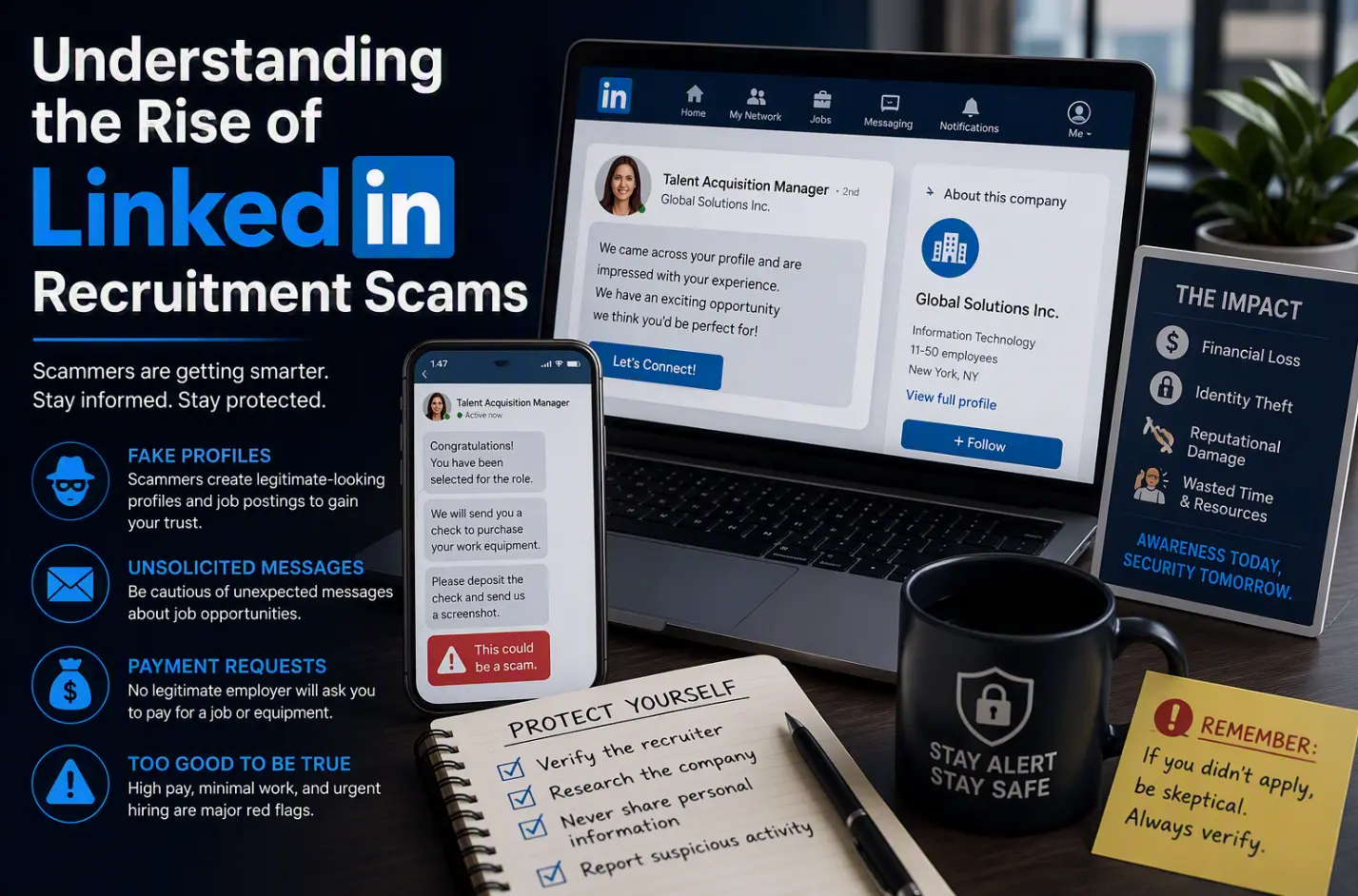
Understanding the Rise of LinkedIn Recruitment Scams
In the evolving landscape of cyber threats, LinkedIn recruitment scams have emerged as a particularly insidious tactic, posing significant risks to businesses in Fort Wayne and beyond. As one of the largest professional networking platforms, LinkedIn offers a fertile ground for scammers to exploit unsuspecting job seekers and even established professionals. The premise of these scams is simple yet effective: leveraging the trust and professionalism associated with LinkedIn to lure victims into sharing sensitive information or money under the guise of lucrative job offers.
The rise of these scams can be attributed to several factors. Firstly, LinkedIn’s vast user base provides scammers with a wide pool of potential targets. Many users are actively seeking job opportunities, making them more receptive to messages from recruiters. Secondly, the professional nature of LinkedIn lends an air of legitimacy to communications on the platform, lowering users’ suspicion and making them more likely to engage with fraudulent offers. Scammers often impersonate real companies or create fictitious ones, complete with fake profiles and job postings, to make their schemes more convincing.
Furthermore, the pandemic has accelerated digital interactions, with many people increasingly relying on online platforms for career advancement. This shift has made it easier for cybercriminals to target individuals who might be less cautious in virtual settings. As these scams continue to evolve, it becomes imperative for businesses and professionals to remain vigilant. By understanding the mechanisms behind LinkedIn recruitment scams, Fort Wayne businesses can better protect themselves and their employees from falling victim to these deceptive tactics.
Recognizing Generic or Too Perfect Recruiter Profiles
In the digital age, LinkedIn has become an indispensable tool for professionals across various industries, providing an ideal platform for networking, job searching, and talent acquisition. However, with its increasing popularity, LinkedIn has also become a fertile ground for scammers who create fake profiles to deceive users. Recognizing these scams is crucial to protecting your business in Fort Wayne from potential threats.
One of the first red flags to be aware of is the presence of generic or overly perfect recruiter profiles. Often, these profiles lack a personalized touch, featuring stock photos and generic job descriptions that do not correspond to any real company or industry. A legitimate recruiter will have a detailed profile, including specific job responsibilities, a verifiable employment history, and endorsements from real connections. In contrast, a scammer’s profile may have an unusually high number of connections with little to no interaction or genuine content.
Scammers may also use overly flattering language or promise unrealistic job offers to lure victims. Be wary of profiles that boast extraordinary accolades without credible sources or endorsements. Additionally, scrutinize messages for language that seems too polished or formal—common tactics used to create an illusion of credibility and professionalism.
To protect your business, implement a protocol for verifying LinkedIn profiles and any associated communication. Encourage employees to look for mutual connections or conduct a quick online search for more information about the recruiter or their company. By remaining vigilant and discerning, Fort Wayne businesses can significantly reduce the risk of falling victim to LinkedIn scams.
Evaluating Job Offers That Seem Too Good to Be True
In the digital age, LinkedIn has become a cornerstone for professional networking and job searching. However, it also serves as fertile ground for scammers seeking to exploit job seekers and businesses alike. One of the most prevalent methods of deception involves job offers that appear too good to be true. Spotting these scams is crucial to safeguarding both personal information and company resources.
Initially, these job offers might catch attention with enticing promises of exorbitant salaries, flexible working conditions, and minimal qualifications required. While such offers are undoubtedly appealing, they often carry telltale signs of fraud. A prudent approach begins with scrutinizing the job description. Legitimate employers provide detailed information about roles and responsibilities, while fraudulent listings are often vague or lack specifics.
Next, examine the company profile on LinkedIn. Scammers might create fake profiles or impersonate existing companies. A red flag is the absence of a company website or a LinkedIn page that seems hastily assembled and lacks credibility. Cross-referencing the company’s contact information, like phone numbers and addresses, with official company directories can also reveal discrepancies.
Another critical step is to assess the communication style. Scam job offers often come with poor grammar, generic salutations, or an overuse of urgency to push applicants into quick decisions. Legitimate companies usually take a professional tone and provide ample time for candidates to consider offers.
In conclusion, while LinkedIn is an invaluable resource for career advancement, exercising due diligence when evaluating job offers can protect against scams. Fort Wayne businesses can further safeguard themselves by educating employees on recognizing these threats, reinforcing a culture of vigilance and security awareness.
Spotting the Tactics of Artificial Urgency in Scams
In the bustling digital landscape of Fort Wayne, where businesses increasingly rely on platforms like LinkedIn for networking and professional growth, the threat of scams exploiting artificial urgency is ever-present. These scams are meticulously crafted to create a false sense of urgency, compelling employees to act hastily without considering the legitimacy of the request. Understanding and recognizing these tactics is vital in safeguarding your business from potential harm.
Scammers often send messages that demand immediate action, such as verifying account credentials or responding to an urgent business proposal. These messages typically mimic legitimate notifications, using language that suggests severe consequences if not addressed immediately. The goal is to trigger a stress response, causing recipients to forego their usual cautionary measures. For instance, an email claiming your LinkedIn account will be deactivated unless you act within the hour can induce panic, leading to impulsive decisions.
To combat these tactics, it is crucial to instill a culture of scrutiny among employees. Encourage them to pause and evaluate the authenticity of any message that demands quick action. Legitimate businesses and platforms rarely impose such stringent time constraints without prior notice. Employees should be trained to verify claims through independent channels, such as direct contact with the purported sender using verified contact details. By fostering an environment where verification is prioritized over immediate compliance, businesses can effectively shield themselves from falling victim to these scams.
In conclusion, by understanding the psychological manipulation behind artificial urgency in scams, Fort Wayne businesses can arm themselves with the knowledge to identify and resist these threats, thereby maintaining their digital integrity and security.
Why Real Companies Don’t Ask for Personal Information Upfront
In the ever-evolving landscape of digital communications, understanding the nuances of legitimate business interactions is essential. One fundamental principle that distinguishes reputable companies from fraudulent entities is their approach to handling personal information. Real companies, especially those operating on professional platforms like LinkedIn, adhere to stringent privacy protocols that prioritize the security and confidentiality of their stakeholders’ data. This is why they do not request sensitive personal information at the outset of any engagement.
Established companies recognize that trust forms the cornerstone of any professional relationship. By refraining from soliciting personal details prematurely, they reinforce their commitment to ethical standards and regulatory compliance. For instance, businesses are often bound by data protection regulations such as GDPR or HIPAA, which mandate explicit consent and transparency in data handling practices. These laws are designed to safeguard individual privacy, ensuring that companies cannot arbitrarily collect or misuse personal information.
Moreover, legitimate firms understand the reputational risks associated with data breaches. They implement robust security measures to protect client information, including clear communication channels and verification procedures. Instead of asking for sensitive data immediately, they engage in a discovery process, assessing potential partnerships or employment candidacies through secure and confidential platforms. This approach not only protects individuals from scams but also upholds the company’s integrity.
By being aware of these practices, businesses and professionals in Fort Wayne can better protect themselves against LinkedIn scams. Recognizing that real companies won’t demand personal information upfront allows them to navigate the digital marketplace with increased confidence, ensuring that their interactions remain secure and trustworthy.