

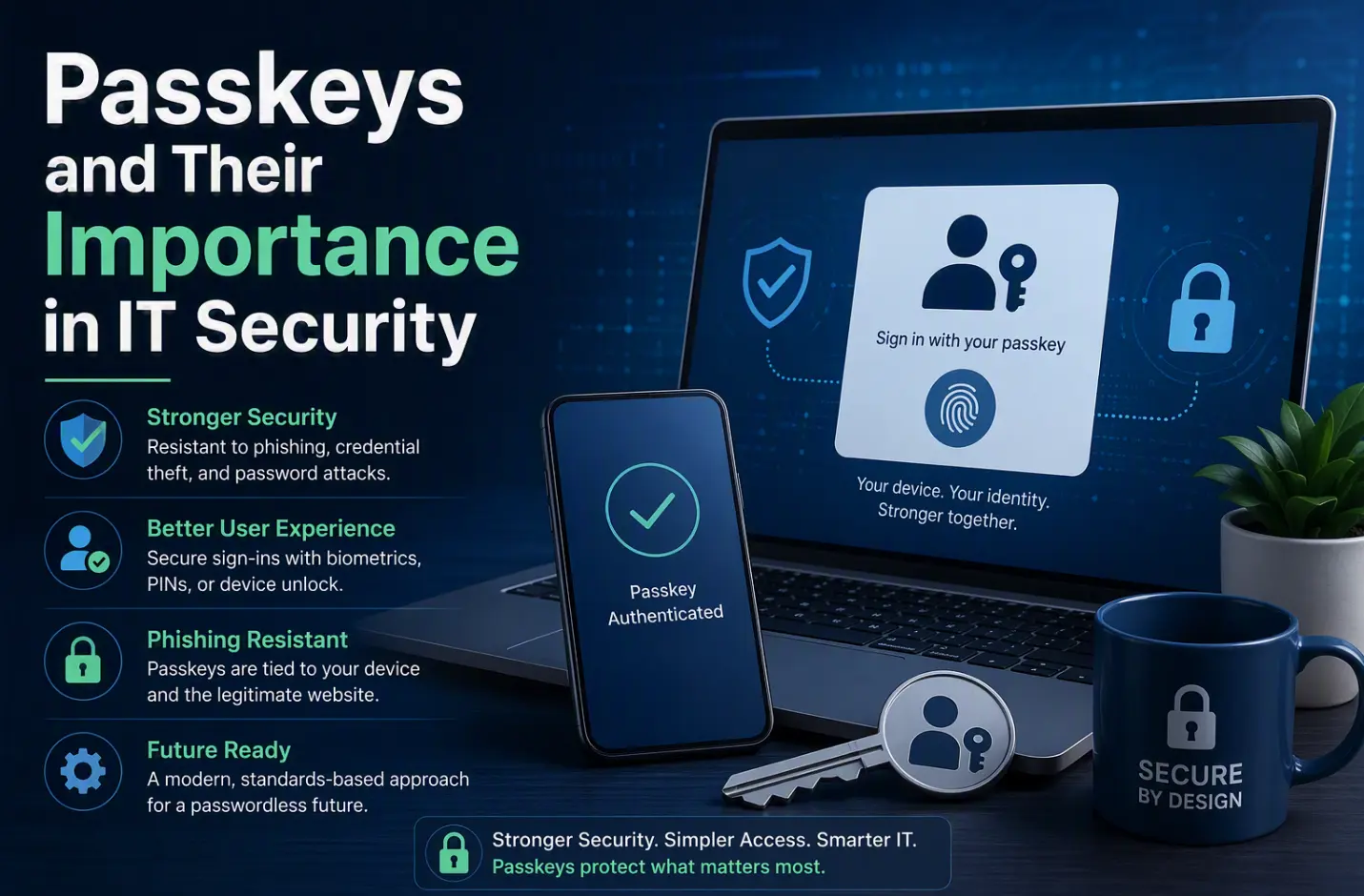
Introduction to Passkeys and Their Importance in IT Security
As the digital landscape continues its exponential growth, safeguarding sensitive information has become a paramount concern for individuals and organizations alike. Enter the realm of passkeys—a modern solution designed to bolster IT security by enhancing traditional password mechanisms. Passkeys represent a significant evolution in how we think about authentication and data protection.
Unlike conventional passwords, which are often vulnerable to phishing attacks and brute force methods, passkeys offer a more sophisticated approach. They are typically multi-factor authentication tools that combine something you know (like a password) with something you have (such as a security token or a biometric identifier), thereby creating a robust defense against unauthorized access.
The importance of passkeys in IT security cannot be overstated. In an era where cyber threats are becoming increasingly complex and persistent, passkeys serve as vital gatekeepers that ensure only authorized individuals can access critical systems and data. This not only helps in protecting sensitive information but also aids in maintaining business continuity by preventing potential breaches that could lead to financial loss and reputational damage.
Incorporating passkeys into IT infrastructures enables businesses to not only comply with regulatory standards but also to foster trust and confidence among clients and partners. As such, understanding and implementing passkeys is essential for any entity striving to fortify its cybersecurity posture in today’s digital age.
The Limitations of Traditional Password Systems
The digital age has ushered in a plethora of security challenges, and traditional password systems have long been at the forefront of these issues. While passwords have served as the primary means of securing access to systems and data for decades, their vulnerabilities are becoming increasingly evident. A major limitation of traditional password systems is their susceptibility to various forms of cyberattacks, such as phishing, brute force attacks, and credential stuffing. Attackers can easily exploit weak passwords or those that are reused across multiple platforms, gaining unauthorized access to sensitive information.
Moreover, the human factor often compounds these vulnerabilities. Users tend to choose passwords that are easy to remember, which often means they are also easy to guess. Complex passwords may offer better security, but they are often forgotten or written down, creating additional security risks. Password fatigue, resulting from the need to remember numerous passwords across different services, further exacerbates the issue, leading many users to resort to insecure practices like using the same password for multiple accounts.
The administrative burden of managing password resets and enforcing strong password policies is another significant drawback. IT departments are frequently overwhelmed by password-related support requests, diverting resources from more strategic security initiatives. As cyber threats evolve and become more sophisticated, the limitations of traditional password systems highlight the urgent need for more robust, user-friendly security solutions that can effectively protect against modern threats.
Exploring the Mechanics of Passkeys
In the evolving landscape of IT security, passkeys have emerged as a revolutionary mechanism, redefining how we approach digital authentication. Unlike traditional passwords, passkeys are cryptographic keys that enable seamless and secure access to digital resources. They are designed to overcome the inherent vulnerabilities of conventional passwords, which are often susceptible to phishing and brute force attacks.
Passkeys operate on a public-private key infrastructure. When a user attempts to log in, their device generates a pair of cryptographic keys: a private key, which remains securely stored on the user’s device, and a public key, which is shared with the service provider. During authentication, the service provider sends a challenge that the user’s device signs with the private key. This signed challenge is then verified with the public key, confirming the user’s identity without ever transmitting the private key or password over the network.
One of the primary benefits of passkeys is their ability to eliminate the need for users to remember complex passwords. By leveraging biometric authentication methods such as fingerprint or facial recognition, passkeys offer a frictionless user experience while significantly enhancing security. This dual advantage of simplicity and robust protection makes passkeys an indispensable tool in modern IT security frameworks, ensuring that sensitive data remains shielded from unauthorized access.