

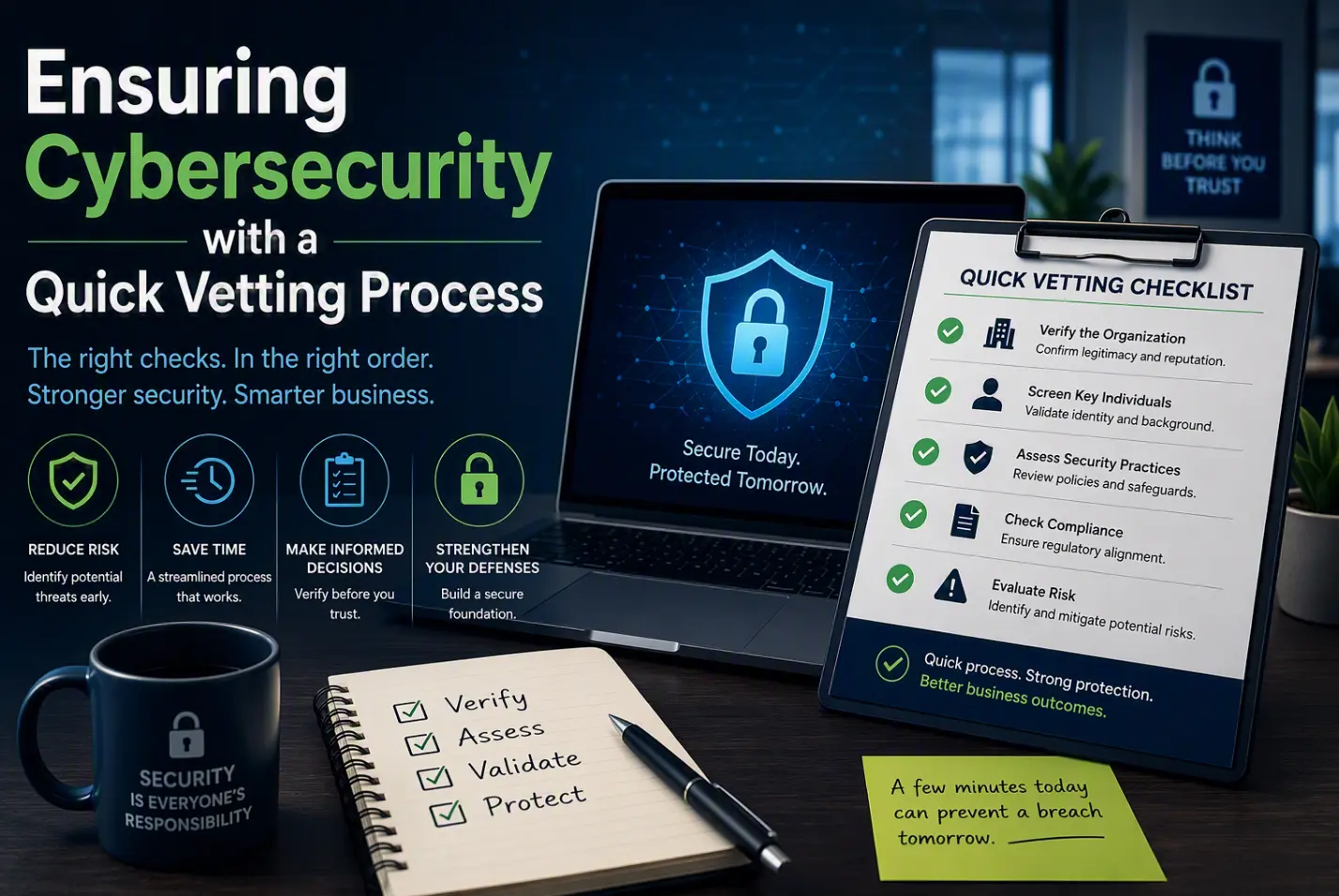
Introduction to Ensuring Cybersecurity with a Quick Vetting Process
In today’s digital landscape, where cyber threats loom large over businesses of all sizes, implementing robust cybersecurity measures is more crucial than ever. However, not all companies have the resources or time to engage in lengthy evaluations. This is where a streamlined, 5-minute vetting process becomes invaluable, offering a quick yet effective way to bolster your organization’s defenses against cyber threats.
The essence of this process lies in its efficiency—allowing businesses to swiftly assess potential vulnerabilities and take immediate action. By focusing on key risk factors, such as network security protocols, employee awareness, and data backup measures, companies can rapidly identify critical areas requiring attention. This approach not only saves time but also ensures that cybersecurity remains a top priority without overwhelming the existing workflow.
Implementing a quick vetting process empowers businesses to stay one step ahead of cybercriminals, protecting sensitive data while maintaining operational continuity. It is a fundamental step for any organization committed to safeguarding its digital assets and ensuring compliance with ever-evolving security standards.
Understanding the Importance of Verifying Publisher Identity
In today’s digital age, where information flows at lightning speed, the importance of verifying the identity of publishers cannot be overstated. With increasing incidents of cyber threats and misinformation, ensuring that the information we consume comes from credible sources is crucial. Verifying the identity of a publisher helps protect against the proliferation of fraudulent information and reduces the risk of falling victim to phishing scams.
Phishing attacks often exploit the trust users place in familiar names, crafting emails and messages that mimic legitimate sources. An email that appears to be from your trusted IT department, for example, could be a cleverly disguised attempt to harvest sensitive data. Therefore, a robust verification process is essential to safeguard against such deceptions, enhancing overall cybersecurity measures.
Moreover, verifying publisher identity is not just about avoiding scams; it is also about maintaining the integrity and trustworthiness of the information ecosystem. Businesses and individuals alike benefit from a more reliable digital environment, where data is protected and interactions are secure. By prioritizing the verification of publisher identities, organizations can not only protect their assets but also foster a culture of security awareness and proactive defense against cyber threats.
Reviewing Permission Requests for Red Flags
In the fast-evolving landscape of cybersecurity threats, an agile and efficient vetting process is crucial to protect an organization’s sensitive information. One of the quick yet effective methods to bolster your cybersecurity framework is by diligently reviewing permission requests for red flags. This step, though seemingly straightforward, serves as a frontline defense against unauthorized access and potential breaches.
To begin, it’s essential to scrutinize the legitimacy of the requestor. Cross-reference their credentials and verify their association with your organization. Often, attackers masquerade as internal team members or trusted partners, exploiting any lapses in verification to infiltrate your systems. Therefore, confirming the identity of the individual requesting access is paramount.
Next, assess the necessity of the requested permissions. Consider whether the access aligns with the individual’s role and responsibilities. Unnecessary access not only poses a security risk but also complicates tracking and accountability. Implement a principle of least privilege, granting only the minimum level of access required for the task at hand.
Moreover, be wary of requests that include urgent language or pressure tactics. These are common red flags in phishing attempts, where attackers create a sense of urgency to bypass regular security protocols. Ensure that any such requests undergo additional scrutiny to verify their authenticity.
By integrating these checks into your permission review process, you not only safeguard your digital assets but also create a culture of security awareness within your organization. This proactive approach contributes significantly to minimizing vulnerabilities and reinforcing your cybersecurity posture.